See Freshwipes In Action
Watch how one wipe cleans, refreshes, and restores that just-showered feeling.

FREE DELIVERY ON £25+ ORDERS
The UK Government's official Be Ready checklist sets out nine categories of items every household should keep in stock — and wet wipes are on it. Here is the full list, what each item is actually for, and the gaps worth filling yourself.

Written by

If you have seen the phrase "UK government prepper list" doing the rounds and wondered whether it is real, it is though the government does not call it that. The official version is the Be Ready checklist, published by the Cabinet Office at gov.uk/beready, and it sets out exactly which items every UK household is advised to keep in stock.
It is a short, sensible list. Nine categories, nothing survivalist, no bunkers or ration packs. And sitting in the middle of it, under Hygiene, is an item we know rather a lot about: wet wipes.
Here is the full list, what each item is actually for, and the few things the official checklist leaves out.
Be Ready is the UK Government's public information campaign on household emergency preparedness. It was developed by the Cabinet Office, working with local and national government, emergency responders, voluntary sector organisations and academics. The old gov.uk/prepare address now redirects to the Be Ready site.
The thinking behind it is straightforward. Most emergencies in the UK are not dramatic — they are a storm that takes the power out for two days, a burst main that leaves a town without water, a flood that closes the roads, or a cyber incident that stops card payments working. In each case, the services you take for granted stop, and it takes a little while for help to reach everyone.
As the campaign puts it: "Being ready for 3 days helps you manage while support reaches those most in need."
That is the whole principle. You are not preparing to survive alone for months. You are preparing to look after yourself for about 72 hours so that the emergency services and utility companies can concentrate on the people who genuinely cannot.
These are the nine categories on the official Be Ready checklist, with the items listed under each.
| Category | Items to check off |
|---|---|
| Water | Bottled water for 3 days — 3 litres per person per day for drinking. More would be needed for other tasks such as cooking and washing. |
| Food | Non-perishable food for 3 days — long shelf life, no refrigeration or cooking needed, e.g. tinned meat, fish or vegetables, dried fruit and nuts. Best to buy food you'd usually eat. |
| Hygiene | Hand sanitiser, wet wipes, hygiene and bathroom products. |
| Light and warmth | Torch (and spare batteries). Blankets, sleeping bags and warm clothing. |
| Communication and information | FM radio (battery or wind-up). Charged power bank. |
| Money and documents | Cash (a mix of coins and notes) and cards. Copies of IDs and documents. Important phone numbers and information, including regular medication and doses. |
| Medical and health | First aid kit or first aid items. Essential medication and medical supplies. |
| Baby products | Baby formula — ready-made or "ready-to-feed" is best, as you may not be able to boil water to make up powdered formula safely. Nappies and wipes. |
| Pet products | Pet food and bottled water. |
The checklist also suggests that if you have spare items, you could consider donating them to people who do not have the means to prepare their own household — or helping someone by photocopying or printing their important documents for them.
Three litres per person per day, for three days, is nine litres per person. For a family of four that is 36 litres — roughly six of the big six-packs of 1.5 litre bottles. It is more than it sounds, and it is heavier than it sounds.
Note the wording carefully: that nine litres is for drinking. The checklist says plainly that "more would be needed for other tasks such as cooking and washing" — but it does not tell you how much more. This is the single biggest gap between the official list and real life, and we come back to it below.
The best line on the whole checklist is "It's best to buy food you'd usually eat." Emergency food that nobody likes sits in a cupboard until it expires and then gets thrown away. Tinned beans, tuna, soup, rice pudding, dried fruit and nuts, crackers, peanut butter. Things you will rotate through anyway.
Assume you cannot cook. If the power is off and you have an electric hob, you cannot. Choose things that are edible cold, and keep a manual tin opener — an electric one is no use to you.
Hand sanitiser, wet wipes and bathroom products are on the list for a reason, and it is worth understanding what each one is actually doing — because they are not interchangeable.
Hand sanitiser disinfects. It does not clean. Alcohol gel kills a lot of germs on skin that is already clean, but it does not remove dirt, grease or organic matter, and it works far less well on visibly soiled hands. It is also not effective against norovirus, which is exactly the sort of thing that spreads when a lot of people are sharing limited washing facilities.
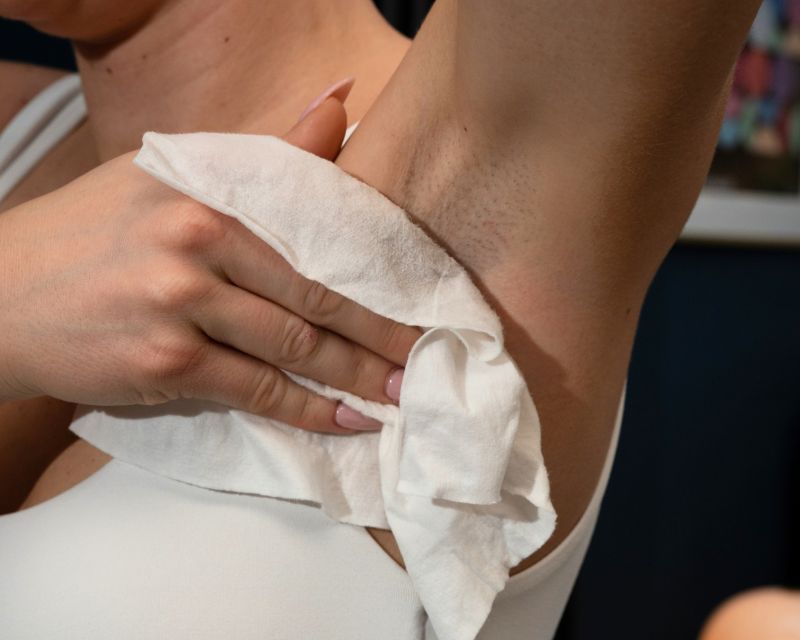
Wet wipes do the physical work. They lift dirt off the skin and carry it away, which is what washing actually is. In a water outage, a wipe is the closest thing you have to a tap. That is why they appear on a government checklist next to torches and tinned food rather than as a toiletries aisle afterthought.
The practical point the checklist does not make: there is a difference between a packet of small baby wipes and something designed to wash an adult body. If the water has been off for two days and you have been sleeping in your clothes, a small wipe is not going to get you very far. Full-size body wipes are built for exactly this job — one wipe per body section, with enough moisture to actually clean rather than smear. A rinse-free shampoo cap covers hair, which is the thing people say makes them feel human again after a few days without a shower.
Keep sealed packs in the kit, and a way to carry a few with you if you have to leave.
The campaign is specific that torches are safer than candles, and notes that homes get cold very quickly once the heating goes off. Spare batteries matter more than the torch does — and a head torch is worth considering, because it leaves both hands free, which you will appreciate when you are hunting through a dark cupboard.
Blankets, sleeping bags, warm layers, hats. Most UK homes lose usable heat within hours of the boiler stopping in winter.
A battery or wind-up FM radio is the one item on this list that most households genuinely do not own any more. Your phone will run out, the mobile network may be congested or down, and broadband goes with the power. Local radio is how emergency information actually reaches people.
The campaign adds a detail worth copying: write down the frequencies of the national and local stations you would use for news, on paper. You will not be able to look them up.
Charge your power bank now, not when the lights go out, and check it every few months — they self-discharge.
Cash in a mix of coins and notes, in case electronic payments or cash machines are disrupted. Printed copies of passports, birth certificates, insurance details and instructions for any medical equipment you rely on.
And — this is the one people skip — important phone numbers written on paper. Almost nobody knows a phone number by heart any more. Write down family, neighbours, your GP, your insurer, and the number to report a power cut: 105 in England, Scotland and Wales, or 03457 643643 in Northern Ireland. Include a list of any regular medication and doses.
A proper first aid kit — waterproof plasters, bandages, a thermometer, antiseptic, eyewash, sterile dressings and gloves, medical tape, tweezers — plus essential medication and supplies.
The guidance makes a point that applies every week, not just in emergencies: request repeat prescriptions in good time, up to five working days before you need the medicine, so you are never running on your last few days' supply when something goes wrong.
This is the most important technical detail on the entire checklist and it deserves to be better known. Powdered formula has to be made up with water at 70°C or above to kill bacteria in the powder itself. If you cannot boil water, you cannot make up powdered formula safely. That is why the guidance specifies ready-made or "ready-to-feed" cartons for an emergency kit. Keep enough for three days, plus nappies and wipes.
Pet food and bottled water. Dogs and cats drink roughly 50ml per kilo of body weight per day, so a 20kg dog needs about a litre a day — three litres across the three days, on top of your household's own supply.
The Be Ready list is deliberately short so that people actually do it. But a few gaps become obvious the moment you picture three days without running water.
The campaign also suggests keeping some essentials in a spare bag, in case you are asked to leave your home quickly — what some people call a grab bag.
The contents overlap with the main kit, but the logic is different: everything has to be carried, by one person, possibly in the dark, possibly in the rain. Keep it light. Documents, medication, a torch, a power bank, cash, a change of clothes, and hygiene items that need no water — wipes and a shampoo cap weigh almost nothing and take up very little room, which is exactly why they belong in a bag you might have to carry.
This is the step that gets skipped, and the reason most household kits quietly stop working. The campaign advises setting a reminder every six months to:
Put it in your calendar when you build the kit, not later.
Two things worth doing that cost nothing:
Sign up to the Priority Services Register. It is a free scheme that tells your electricity, gas and water providers that you need additional support when supply is interrupted — relevant if you rely on medical equipment, have a disability, are of pensionable age, or have young children. You sign up through your own suppliers.
Make a plan to check on neighbours, particularly if the power goes out. The campaign mentions this explicitly, and in practice it is the thing that makes the most difference to the most people.
This is UK-wide guidance, but if you live in Scotland or Northern Ireland, Ready Scotland and NI Direct carry the advice specific to your area.
Yes, although "prepper" is not the government's word for it. The official household preparedness checklist is the Be Ready checklist, published by the Cabinet Office at gov.uk/beready. It covers nine categories: water, food, hygiene, light and warmth, communication and information, money and documents, medical and health, baby products and pet products.
Three days. The reasoning is that being ready for 72 hours lets you manage while support reaches the people who need it most.
Three litres per person per day for drinking, so nine litres per person across three days. More is needed for cooking and washing on top of that.
Yes. Wet wipes are listed in the Hygiene category of the official Be Ready checklist, alongside hand sanitiser and bathroom products. They are there because in a water outage they are the only practical way to clean skin properly — hand sanitiser disinfects, but it does not remove dirt.
Everything from severe weather and flooding to power cuts and cyber attacks. The kit is deliberately generic: the same items help across a wide range of disruptions, because what fails is usually the same handful of services.
No. Almost everything on the list is an ordinary household item. The official advice is specifically to buy food you would normally eat, and to build the kit gradually out of your weekly shop rather than buying a prepackaged box.
The Be Ready checklist is not alarmist and it is not asking much. Nine litres of water per person, some tins you would eat anyway, a torch, a radio, some cash, your medication, and a way to stay clean when the taps stop.
That last one is the part people underestimate. Three days without washing is not dangerous, but it is grim, and in the middle of a stressful week it chips away at you more than you would expect. Staying clean is not the luxury item in an emergency kit — it is the thing that keeps you feeling like yourself while everything else is inconvenient.
That is the whole reason FreshWipes exists: proper, full-size, biodegradable body wipes for adults, for every situation where a shower is not an option. If you are building a kit this week, a couple of packs and a shampoo cap will take up less room than a single bottle of water.
Browse FreshWipes body wipes and rinse-free hygiene →
Source: Be Ready, Cabinet Office — beready.campaign.gov.uk. Guidance is summarised here in good faith; always check the official site for the current version. Call 999 if you or someone else is in immediate danger.
Watch how one wipe cleans, refreshes, and restores that just-showered feeling.


Explore the customer favourites people rely on every day.


Frequently Asked Questions
 STRUGGLING TO SHOWER
Allergic to chlorhexidine or have sensitive skin? Here's how to choose rinse-free body wipes that suit you, and which...

 STRUGGLING TO SHOWER
When showering isn't an option because you've had surgery, you're caring for someone with limited mobility, you've g...
 STRUGGLING TO SHOWER
There are times in life when having a shower just isn’t possible. Whether you’re recovering from surgery, caring for ...
 STRUGGLING TO SHOWER
Maintaining good personal hygiene is important for health, comfort, and confidence. But there are many situat...