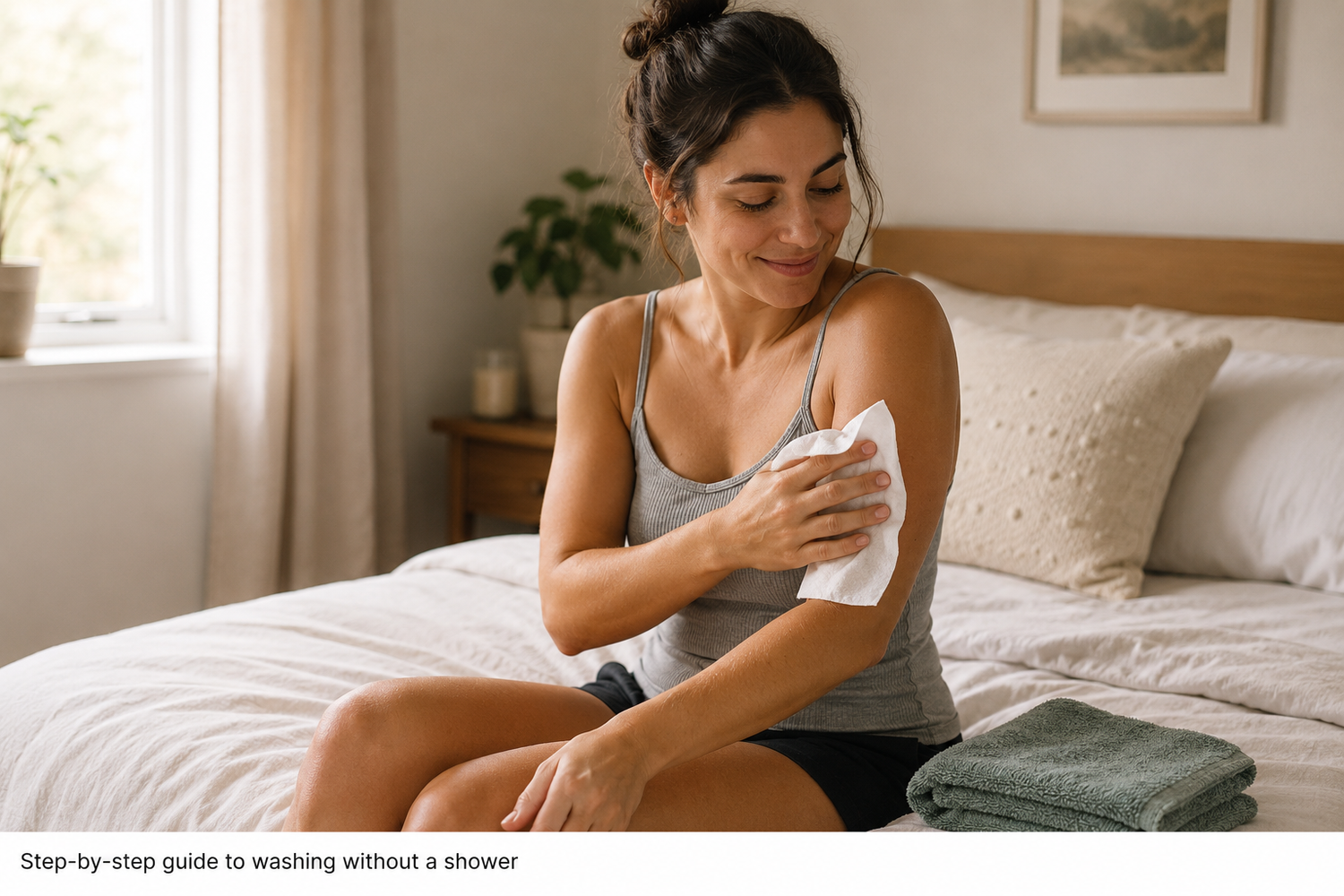
When showering isn't an option because you've had surgery, you're caring for someone with limited mobility, you've got a cast you can't get wet, or some days the energy just isn't there it can be genuinely hard to feel like yourself. Getting clean is one of those small, daily rituals that quietly holds everything together, and when it stops being easy, everything else feels harder too.
The good news is that you can stay properly clean, fresh and dignified without a shower. People have been doing it for centuries, and modern products have made it quicker and kinder on the skin than ever. This is a step-by-step UK guide to washing without a shower at home, in hospital, or while you're recovering.
We've written it from 6 years of helping customers with exactly this problem. Where it helps, we'll mention the products we make. Where it doesn't, we'll tell you that too.
Who this guide is for
You'll find this guide useful if you're:
-
Recovering from surgery and have been told not to get a wound wet
-
Living with chronic illness, fatigue, or limited mobility
-
Caring for an elderly parent, partner or relative
-
Healing a broken bone, sprain, burn or other injury in a cast or dressing
-
Pregnant, post-natal, or recovering from a caesarean
-
Going through a migraine flare, low-energy/fatigue day or recovery from chemotherapy
-
Without hot water (boiler broken, camping, travelling, festival)
If any of those describes you or someone you love, you're in the right place.The quick answer
To wash without a shower, you need four things: (1) something to clean your skin with wet wipes designed for the body (not baby wipes), a flannel with warm water and soap, or rinse-free body foam; (2) something to wash your hair with a rinse-free shampoo cap, or dry shampoo for shorter days; (3) clean towels, fresh clothes and a private space; (4) a routine. Done properly, the whole process takes 10–15 minutes and leaves you feeling genuinely showered.
We'll walk through each step below.
What you'll need
Lay these out before you start so you're not reaching for things halfway through:
-
A pack of body wipes (we recommend ours, but pick whatever you can get just look for ones that are antibacterial, large, and thick. Baby wipes won't cut it on a grown-up body more on that below)
-
A flannel or two if you have them. Useful for drying patted-down skin and for spots you want to give a bit more attention to
-
A bowl of warm water if you're using a flannel, plus your favourite mild soap
-
A rinse-free shampoo cap if you're not washing your hair in the bath that day
-
A clean towel to lay across the bed or chair
-
Fresh underwear and clothes
-
Deodorant, moisturiser, hairbrush and any other usual bits, lip balm, hand cream, toothbrush
-
A bin or bag nearby for used wipes (please don't flush them)
A few minutes of setup makes the whole thing feel less like a chore and more like proper self-care.
Step 1: Get comfortable and warm
Make sure the room is warm — you'll be partially undressed and your body cools quickly. Shut the door. Put a clean towel down on the bed, sofa or chair. If you're helping someone else, sit them up if they can manage it, or roll a thin towel under the small of their back so they're propped slightly.
A note for carers: people who are unwell often feel embarrassed about needing help to wash. The smallest things help — closing curtains, only uncovering the area you're working on, a chatty voice. Dignity first, always.
Step 2: Wash your body, top to bottom
This is the bit where order matters. Always wash from your cleanest areas to your dirtiest, it stops you spreading bacteria.
A good order is: face → neck → arms and hands → chest and back → legs and feet → intimate areas → bottom. If you're using wipes, one large body wipe is usually enough for the whole body — our wipes are roughly A4-sized and seriously wet (around 367g per pack of 12, which means about 30g of cleansing lotion per wipe 15 x more than a baby wipe). If you're using a flannel, change the water halfway down your body, or use a second flannel for the lower half.
Two important rules:
-
Avoid your face and eyes with antibacterial body wipes. The ingredients that kill body-odour bacteria can sting. We sell separate facial wipes for that, and a warm flannel with a tiny bit of soap is just as good.
-
Don't use wipes on a wound or wet dressing unless your surgeon or nurse has said you can. Cleansing around a wound is fine; cleaning the wound itself isn't a job for a body wipe.
Pat yourself dry as you go if needed — a body wipe leaves your skin a little moist (it's water-based) but it'll air-dry in under 60 seconds.
Step 3: Wash your hair without water
Hair is the bit people worry about most. The good news: there are now two genuinely good ways to wash hair without a shower.
Option A — a rinse-free shampoo cap. This is a soft shower-cap-shaped bag filled with shampoo and conditioner. You put it on your head, massage your hair through the cap for two or three minutes, take it off, and towel-dry. No rinsing. Your hair feels clean, smells fresh, and the whole thing takes about 4 minutes. Brilliant for after surgery, in hospital, for migraine days, or for elderly relatives who can't sit at a sink. (We make these — they're called Shampoo Caps — and they're a customer favourite for a reason.)
Option B — dry shampoo. Cheaper, faster, available in any supermarket. It freshens up oily roots but doesn't actually clean your scalp. Fine between proper washes but not a long-term replacement.
For longer hair, you can also do a sink wash if you can sit at one — pour warm water from a jug, shampoo, jug again. But that's still a wet method, and not everyone can manage it.
Step 4: Intimate areas: gently does it
Intimate skin needs more care than the rest of your body. It's more sensitive, more prone to irritation, and the wrong product can throw the natural balance off.
A few practical tips:
-
Use a separate, smaller wipe designed for intimate use — ours are unscented mini intimate wipes, which is what we recommend if you're someone who reacts to fragrance
-
Always wipe front to back
-
One wipe per pass — don't double-back over an area
-
Pat dry rather than rubbing
If you're post-op, post-natal, or recovering from a caesarean specifically, please follow whatever cleaning advice your hospital or midwife gave you. We've written more about post-operative washing here.
Step 5: Look after sensitive skin
A lot of our customers come to us because their skin reacts to everything. Eczema, psoriasis, lung disease, sensitivity from chemotherapy, post-radiation skin — the wrong product makes a hard week harder.
A few things that help:
-
Pick fragrance-free if you've got reactive skin. We make an unscented body wipe for this reason
-
Patch test first on the inside of your wrist if you're trying a new product
-
Moisturise after washing, especially in winter. Wipes leave your skin slightly moist but they don't replace a moisturiser
-
Avoid antibacterial ingredients near broken skin — they sting and can slow healing
A small note: our antibacterial wipes contain chlorhexidine digluconate — the same antibacterial agent used in hospitals and in Savlon. It's safe for most people but if you know you're allergic to it, our rinse-free body cleansing foam is chlorhexidine-free. Always tell your doctor if you have a reaction; it's a common hospital ingredient and they'll want it on your notes.
Beyond washing: deodorant, clothes and bedding
A proper wash without a shower isn't just about your skin. The rest of the routine matters too:
-
Change into completely fresh clothes — including underwear and a clean top. Wearing yesterday's t-shirt over freshly cleaned skin undoes half the work
-
Change pillowcases and sheets more often if you're spending long stretches in bed. Once a week minimum, twice if you can
-
Don't skip deodorant just because you've used antibacterial wipes — they work on body-odour bacteria for a few hours but they aren't a 24-hour antiperspirant
-
Open a window or use a small fan. Fresh air on freshly cleaned skin is half the "I feel clean" feeling
How often should you do a no-shower wash?
For most people, once a day is plenty, with a quick freshen-up of armpits and intimate areas in the evening if you've had a hot day or felt sweaty. You don't need to wipe your whole body twice a day — over-cleaning can dry your skin out and irritate it.
If you're caring for someone bedbound, a full top-to-toe wash once a day in the morning, with a face-and-hands freshen before bed, is the routine most district nurses follow.
When should you call your GP?
Washing without a shower is normal and safe for short-term recovery. But please get medical advice if:
-
A wound or surgical site becomes red, hot, swollen or smelly — this can be a sign of infection
-
You notice a new rash, blistering or persistent itching after using a new product
-
You feel light-headed, dizzy or short of breath during washing, especially if recovering from surgery
-
You're caring for someone whose skin is breaking down in pressure areas (heels, base of spine, hips) — they need a district nurse review, not just a wash
A quick GP call or 111 chat is always free and always worth it.
A note from Liz, our founder
"I started FreshWipes™ after seeing patients in hospital struggling with with this, being told 'no shower for six weeks' after surgery, looking after grandparents who'd lost the ability to bathe themselves, caring for friends after illness. Real life isn't a shower every morning. Real life is a hospital bed, a school run, a long shift, a migraine, a cast, a recovery. I built these wipes for those days. I hope this guide helps you feel a bit more like yourself, whatever you're going through."
We're a small (but rapidly growing) UK company based in Sussex. Our wipes are biodegradable, made from plant cellulose, recommended by GPs, and stocked in WHSmiths and hospital shops across the country. If a wipe ever doesn't work for you, we offer a 365-day money-back guarantee, no quibbles. You can call us on 01323 337000 Monday to Friday if you want to talk to a person.
-
-
Frequently asked questions
Can I really get properly clean without a shower? Yes, if you use products designed for the body (not just baby wipes) and you take a few minutes to do it properly. The reason hospitals use bed-baths and antibacterial wipes is because they work. The combination of physical cleaning and an antibacterial agent removes the bacteria that cause body odour and lifts dirt and dead skin. Where a shower wins is on warmth and the psychological "reset" of being under running water, but on actual cleanliness, a proper wipe-down is genuinely close.
How is a body wipe different from a baby wipe? Three things. Size: our body wipes are roughly A4 (12×8"); a baby wipe is about a quarter of that. Wetness: a pack of 12 of our wipes weighs around 367g, about double a pack of baby wipes; that's water and cleanser, not paper. Active ingredients: baby wipes are designed to clean a nappy area on a baby; our wipes contain a low-level antibacterial agent (chlorhexidine, the same as in Savlon) that neutralises body-odour bacteria. Baby wipes also sometimes contain plastic. Ours don't.
Are body wipes safe for the elderly? Yes, and they're widely used in care homes and by district nurses for exactly this reason. Choose unscented if the skin is sensitive or fragile, and don't use antibacterial wipes on broken skin or pressure sores without nurse advice.
Can I use a body wipe instead of a shower every day forever? Mostly yes, but every couple of weeks try to get into water if you can , a proper soak helps soften and remove the dead skin cells that even a great wipe can't fully shift. If a shower or bath isn't possible at all (chronic mobility issues, etc.), daily body wipes plus a weekly hair wash and bedding change is a sustainable routine.
Are body wipes flushable? No. Ours are too big and too thick — a flannel-sized wipe will block your drains. Bin them, or compost them if you have a garden compost (they're plant-cellulose and break down naturally in around 90 days).
How much do body wipes cost compared to a shower? A pack of 12 of our body wipes costs from £5.99 — about 50p per full-body wash. A power shower runs at about £0.30–£0.90 per shower in water and heating, so a wipe is more cost effective per wash. But if showering isn't possible, that's a moot comparison; and once you factor in the time, energy and risk of slipping for someone recovering or unwell, wipes become an obvious choice for the days you need them.
Try a pack — risk-free
If you want to try our wipes, our Try Me Kit is the cheapest way to sample two or three scents and the foam. Every order from us comes with a 365-day money-back guarantee — if it isn't right for you, send the rest back for a full refund.
Shop body wipes → · Shop shampoo caps → · Shop our rinse-free foam →
-

 Your information is safe with us



Leave a comment
All comments are moderated before being published.
This site is protected by hCaptcha and the hCaptcha Privacy Policy and Terms of Service apply.